Accumulator Boost Mechanics Reshaping Payout Dynamics in Championship Leagues
Clara Lehmann · Jun 22, 2026
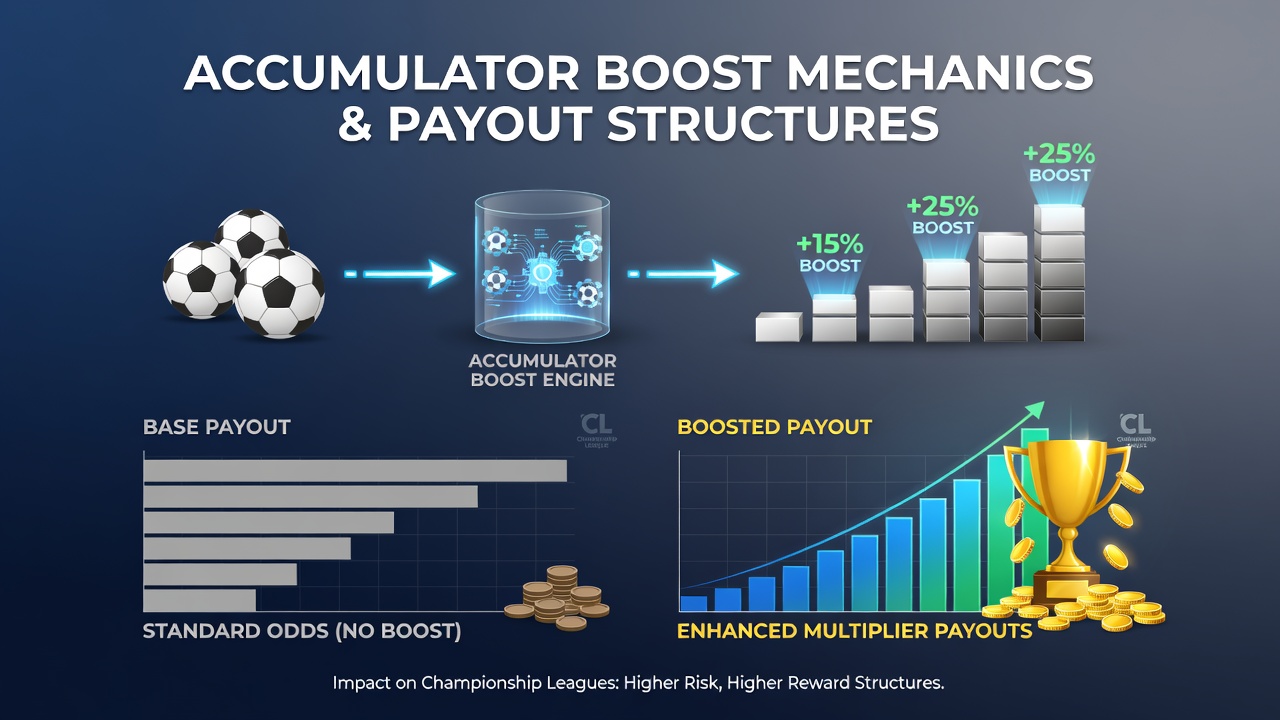
Accumulator Boost Mechanics Reshaping Payout Dynamics in Championship Leagues
Accumulator boost mechanics operate as structured enhancements applied to multi-selection wagers in championship league markets where operators adjust base odds upward for combinations meeting specific criteria such as minimum leg counts or event types, and these adjustments directly influence the final payout multipliers presented to participants across divisions like the EFL Championship and equivalent second-tier competitions worldwide. Data from industry reports shows that such boosts typically range from 10 percent to 50 percent additions on qualifying accumulators while operators recalibrate their overall margin structures to accommodate the promotional layer without altering single-bet offerings. Researchers at academic institutions have documented how these mechanics create layered payout tiers that shift risk allocation between the operator and the participant depending on the number of selections included.
Core Components of Accumulator Boost Systems
Operators implement accumulator boosts through automated algorithms that scan selections for eligibility then apply the enhancement at the point of bet placement, and this process integrates with live odds feeds from championship fixtures to ensure real-time accuracy. Studies from research bodies indicate that common triggers include four or more legs on football markets while some platforms extend boosts to basketball or hockey championship schedules when volume thresholds are reached. Those who analyze payout data note that the boost percentage often scales with accumulator complexity so a five-leg bet might receive a larger uplift than a three-leg version yet the underlying stake remains unchanged.
Championship leagues present particular opportunities for these mechanics because fixture density allows multiple overlapping matches within short windows and operators respond by tailoring boost promotions to specific rounds such as midweek cup ties or weekend league double-headers. Figures from regulatory filings reveal that payout structures adapt by distributing the cost of boosts across higher-volume betting periods which maintains house margins while increasing average return potential for qualifying bets. Observers tracking these patterns have identified consistent application windows around June 2026 when several European and international championship seasons transition into pre-season friendlies that sometimes qualify for promotional boosts.
Impact on Overall Payout Structures
Payout structures in championship betting environments incorporate accumulator boosts as variable multipliers that sit atop standard decimal or fractional odds and this layering requires operators to recalculate liability models for each boosted combination. Industry analyses demonstrate that the effective payout percentage rises for participants while operators offset exposure through adjusted pricing on non-boosted markets or through volume-based hedging strategies. Evidence from multiple league contexts shows that boosted accumulators can elevate total returns by factors that compound across legs yet remain capped by maximum payout limits enforced on individual accounts.
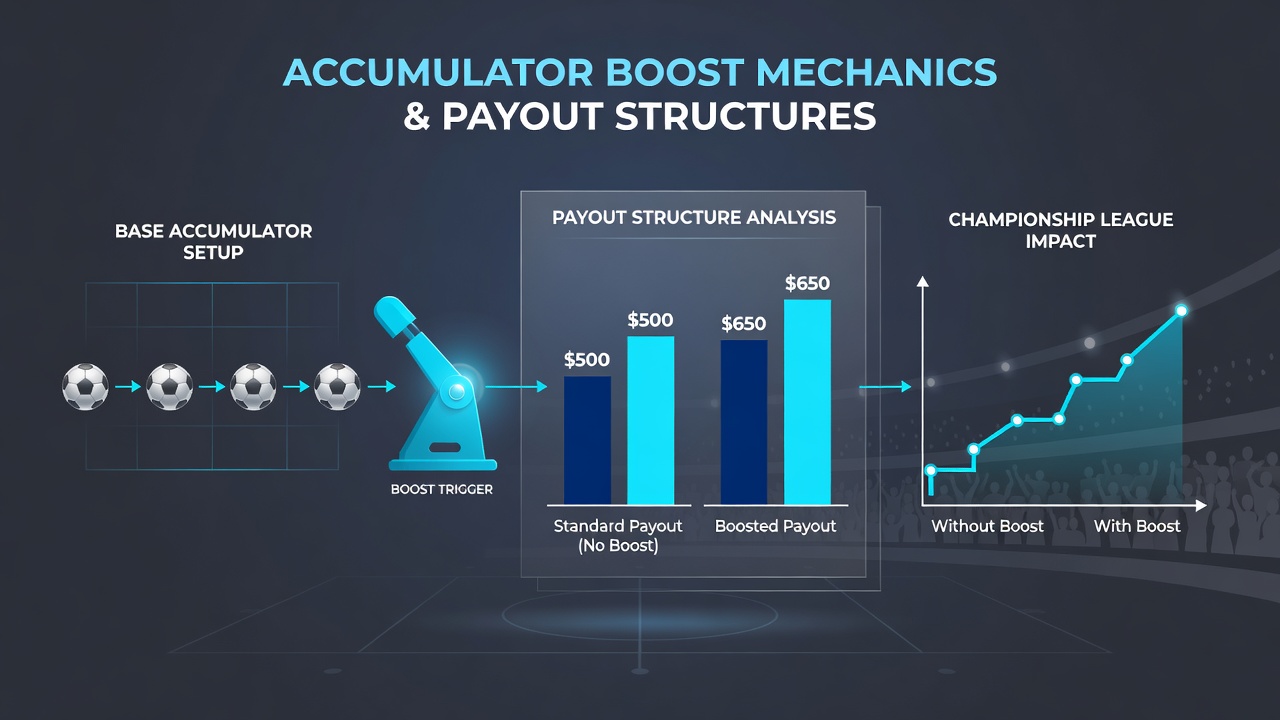
Those examining structural changes note that boost mechanics sometimes lead to tiered bonus systems where higher boosts apply to accumulators built entirely from championship games versus mixed-league selections and this differentiation affects how participants construct their bets. Reports compiled by the American Gaming Association highlight similar patterns in North American sports contexts where accumulator-style parlays receive promotional lifts that alter expected value calculations across extended seasons. The reality is that payout tables published by operators must now display both base and boosted figures side by side so participants can compare outcomes before committing stakes.
Regional Variations and League-Specific Applications
Championship leagues in different regions apply boost mechanics according to local market preferences and regulatory frameworks with European operators frequently emphasizing football accumulators while Australian and Canadian platforms extend similar features to rugby and ice hockey divisions. Data compiled by the Australian Gambling Research Centre indicates that boost frequency increases during high-attendance periods such as international breaks when championship clubs release players for national duty and this timing influences how operators structure their promotional calendars. Participants who track these regional differences often discover that payout ceilings and eligibility rules vary enough to affect strategy across borders.
Operators maintain separate boost pools for different championship tiers so that second-division matches might receive distinct percentage uplifts compared with top-flight equivalents and this segmentation helps balance liability across the full fixture list. Research indicates that the introduction of boosts correlates with measurable shifts in average bet size and selection count with multi-leg wagers becoming more prevalent once enhancements activate. Those monitoring June 2026 activity have recorded examples where late-season championship promotions incorporated boosts tied to promotion or relegation implications thereby aligning mechanical incentives with competitive stakes.
Conclusion
Accumulator boost mechanics continue to integrate into championship league betting frameworks by modifying payout multipliers in measurable ways that operators balance against margin requirements and liability controls. Data across multiple jurisdictions shows consistent patterns of eligibility criteria and scaling percentages that reshape how returns accumulate on multi-selection bets. Observers tracking developments through 2026 note ongoing refinements to these systems as leagues maintain dense schedules and participants adapt their approaches accordingly.