Esports Markets Reshape Accumulator Strategies in British Betting Markets
Clara Lehmann · Jul 18, 2026
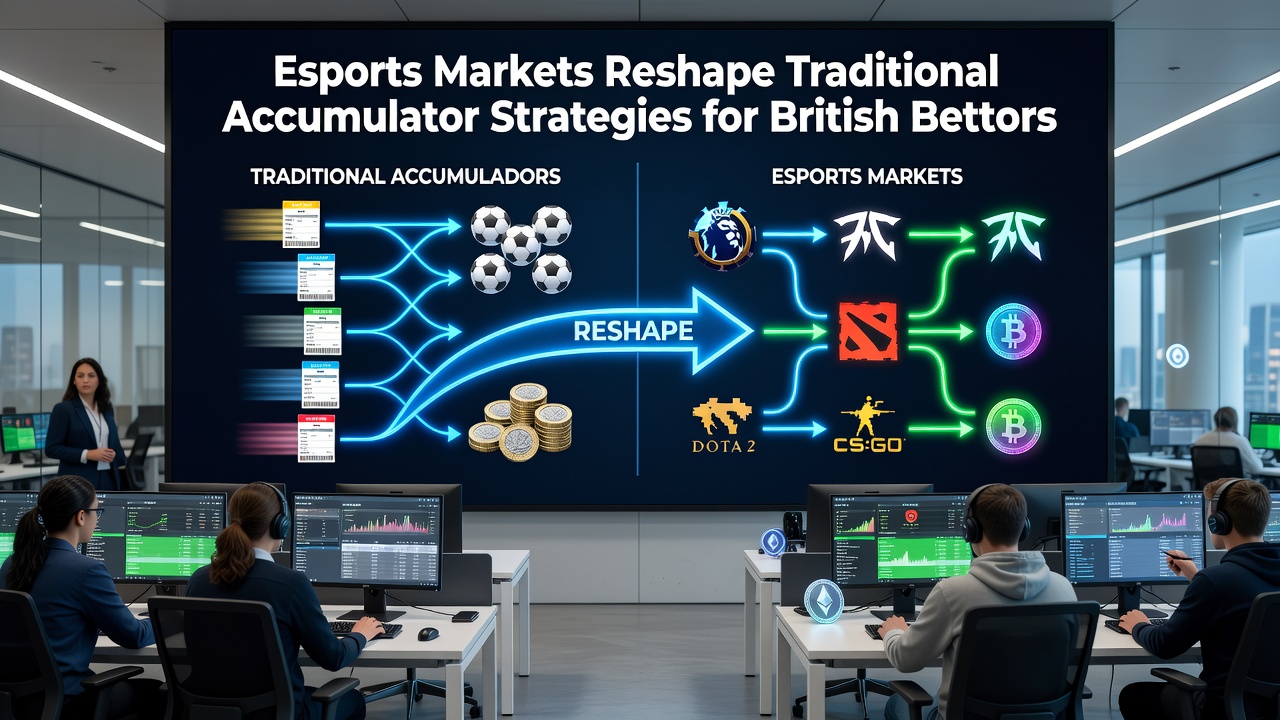
Esports Markets Reshape Accumulator Strategies in British Betting Markets
British bettors have long relied on accumulator bets that combine multiple selections across football, horse racing, and tennis, yet esports markets now introduce new variables that alter how those combinations form, since live odds on titles like League of Legends and Counter-Strike shift faster than traditional sports and create fresh layering opportunities for multi-leg wagers.
Traditional Accumulator Foundations
Accumulators work by multiplying odds across several legs, which raises potential returns while increasing risk, and British platforms have offered these structures for decades across fixed-odds football markets where match outcomes remain relatively predictable over ninety minutes. Data from industry reports show that football accumulators still account for a large share of volume, yet the addition of esports fixtures allows punters to insert shorter-duration matches that complete in under an hour and therefore fit more legs into a single slip without extending settlement times across days.
Esports Market Characteristics
Esports events feature distinct markets such as map winners, first-blood timings, and economy-round outcomes that rarely appear in conventional sports, which means bettors can now construct accumulators that mix macro results with micro events inside the same game. Observers note that these granular options often carry higher volatility because player form and patch updates influence probabilities more abruptly than weather or pitch conditions affect football, and this volatility encourages strategic adjustments like cashing out early legs once initial esports matches resolve.
Strategic Shifts Observed in July 2026
By July 2026 platform data indicated that accumulators containing at least one esports leg grew by double-digit percentages compared with the same period teh previous year, while pure football accumulators showed slower growth, according to figures released by the European Gaming and Betting Association. Bettors began pairing evening Premier League fixtures with afternoon esports tournaments from the LEC and LPL regions, because the staggered schedules allow sequential settlement that reduces overall exposure time. Researchers tracking these patterns found that multi-leg tickets with mixed sports and esports legs produced settlement rates roughly 15 percent faster than all-football equivalents, which in turn freed capital for additional wagers within the same day.
Market Integration Examples
One documented approach involves starting an accumulator with a CS2 map handicap at elevated odds, then adding a Premier League over-2.5 goals selection once the esports result confirms, and finally layering a tennis set handicap from a late-evening match. This sequencing exploits the rapid resolution of esports legs to lock in partial profits before slower sports markets conclude, and operators have responded by introducing accumulator builders that automatically suggest compatible esports markets based on remaining legs. Industry analyses reveal that such tools increased user engagement on mixed-sport slips during major esports events like the BLAST Premier and the Mid-Season Invitational.

Regulatory and Platform Adjustments
While the UK market continues under existing frameworks, operators have aligned certain features with broader European standards outlined in reports from the European Gaming and Betting Association, which track cross-border esports betting trends. Platforms now display real-time probability adjustments for in-game esports markets that feed directly into accumulator calculators, allowing users to monitor combined odds without leaving the slip builder. A study published by the University of Nevada, Las Vegas International Gaming Institute examined similar integration patterns in regulated markets and found that transparent live data reduced user disputes over settlement timing when esports legs resolved faster than traditional sports legs.
Accumulator Builder Tools and Data Trends
Operators introduced filters that highlight esports markets with statistical correlations to traditional selections, such as linking high-kill-volume maps to over-total goals in concurrent football fixtures, and these filters rely on aggregated performance data rather than manual selection. Figures from multiple European operators indicate that accumulators built with these assisted tools achieved higher average ticket values during July 2026 tournaments, because users added one or two additional esports micro-markets once the base structure appeared viable. Yet the same data sets also show that overall loss rates on mixed accumulators remained consistent with historical football-only figures, suggesting the added markets expand volume without fundamentally altering risk distribution.
Conclusion
Esports markets continue to supply new components that British bettors incorporate into accumulator construction, because shorter match durations, granular sub-markets, and staggered global schedules create sequencing advantages not available in single-sport tickets. Platform tools, operator data releases, and academic examinations all document measurable shifts in how multi-leg wagers form and settle, while regulatory references from European bodies provide context for ongoing platform adaptations. These developments expand the range of available strategies without replacing established football and racing accumulators, which retain substantial market share.