Esports Niches Blending Into Established Bookmaker Lines and Shaping Accumulator Builds
Clara Lehmann · Aug 10, 2026
Esports Niches Blending Into Established Bookmaker Lines and Shaping Accumulator Builds
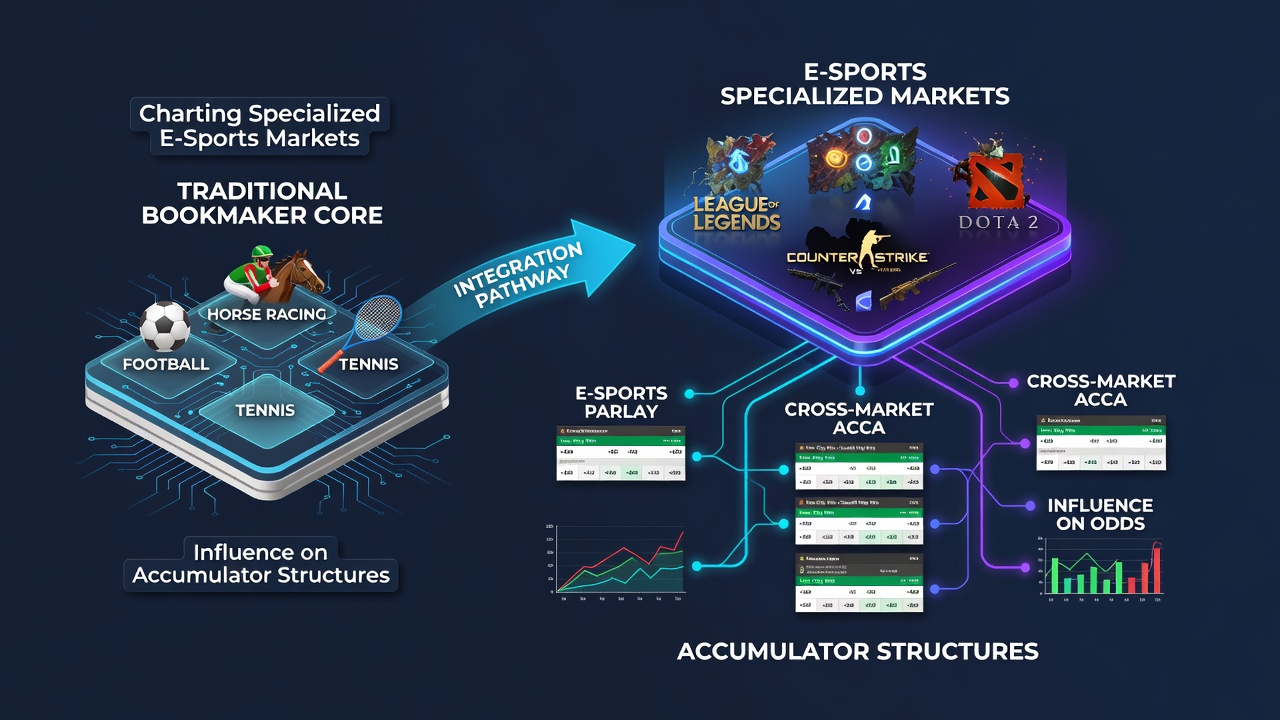
Traditional bookmakers have steadily expanded their catalogs to include detailed esports offerings, and these additions have started to reshape how accumulators get constructed across multiple platforms. Markets once limited to match winners now feature granular selections such as first blood timing in League of Legends, bomb plant success rates in Counter-Strike, and hero damage thresholds in Dota 2, which operators integrate directly into multi-leg betting structures. Observers note that this layering allows bettors to combine esports outcomes with conventional football or tennis results, creating hybrid accumulators that carry distinct risk profiles and payout calculations.
Expansion of Granular Esports Selections
Operators have introduced player-specific props and map-level statistics because data from tournament organizers supplies reliable inputs for pricing these wagers accurately. Figures from the European Gaming and Betting Association show that esports handle grew by double-digit percentages through the first half of 2026, with specialized markets accounting for a rising share of total volume. Those who track platform updates see new categories such as economy round outcomes and vision score differentials appearing in August 2026 listings, often placed alongside established football accumulator options to encourage cross-category combinations.
Bookmakers adjust odds compilation processes to accommodate the faster cadence of esports events, which can produce multiple matches within a single evening. This scheduling pattern supports shorter accumulator windows compared with weekend football slates, and it influences how operators set maximum payout caps on mixed-sport parlays. Research from Australian regulatory bodies indicates that platforms offering these integrated markets experience higher engagement rates during major esports tournaments such as the Mid-Season Invitational and IEM Cologne.
Accumulator Construction Adjustments
Accumulator structures change when esports legs enter the mix because volatility differs from traditional sports. A five-fold parlay that pairs two esports map bets with three football team totals requires recalibrated staking formulas, since esports results resolve more quickly and carry different variance levels. Operators respond by offering tailored insurance promotions on mixed accumulators, which refund a portion of the stake if one esports leg fails while the remaining legs succeed.

Those who examine historical payout data observe that accumulators containing three or more esports components often feature boosted odds during peak tournament periods. This practice stems from liquidity management needs, as esports markets can attract concentrated betting action around specific events. In August 2026 several platforms introduced dynamic odds that shift in real time for accumulator legs involving live esports matches, allowing bettors to lock in revised returns before final maps conclude.
Integration Challenges and Market Data
Platform developers face technical demands when syncing esports data feeds with existing accumulator engines, since match durations vary widely and require continuous updates. Reports compiled by the Responsible Gambling Council in Canada highlight that operators investing in robust data partnerships report fewer pricing discrepancies across these specialized lines. The same studies note that mixed accumulators involving esports demonstrate settlement times up to 80 percent faster than those built solely from slower-paced sports.
Regional differences appear in how regulators approach these products. Australian state frameworks emphasize disclosure of odds compilation methods for esports props, whereas certain European jurisdictions focus on age verification protocols tied to the younger demographic that follows competitive gaming. Data shared by industry research groups indicates that accumulator participation rates among esports enthusiasts rose noticeably once bookmakers began listing niche selections such as overtime maps and round-specific handicaps.
Future Patterns in Mixed Betting Structures
Market analysts expect continued refinement of accumulator rules as esports calendars overlap more frequently with traditional sporting seasons. Operators test new formats that cap the number of esports legs within a single parlay or apply separate maximum stake limits to maintain balance across product types. Evidence from transaction monitoring systems reveals that users who combine esports and conventional markets tend to adjust their stake sizing based on the resolution speed of the esports components, often placing smaller initial amounts to manage exposure across rapid result cycles.
Conclusion
Specialized esports markets have moved from peripheral status to integrated components within traditional bookmaker systems, directly affecting how accumulators are priced, settled, and promoted. The inclusion of granular selections such as player performance metrics and map outcomes introduces new variables into multi-leg structures, prompting operators to adapt both technical infrastructure and promotional tools. Data from multiple regulatory and industry sources demonstrates measurable shifts in betting patterns during 2026, particularly around major tournament periods, while mixed accumulators continue to evolve in response to these developments.