How Stake Protection Works in Accumulator Wagers for Football and Racing Events
Ines Richter · Jul 25, 2026
How Stake Protection Works in Accumulator Wagers for Football and Racing Events
Stake protection mechanics in multi-selection wagers operate through predefined refund triggers that activate when specific conditions occur within football accumulators or racing multiples. These systems map out exact thresholds where partial or full stake returns apply, and operators across different platforms maintain consistent rules based on the number of selections that fail to meet the criteria.
Core Mechanics of Refund Triggers
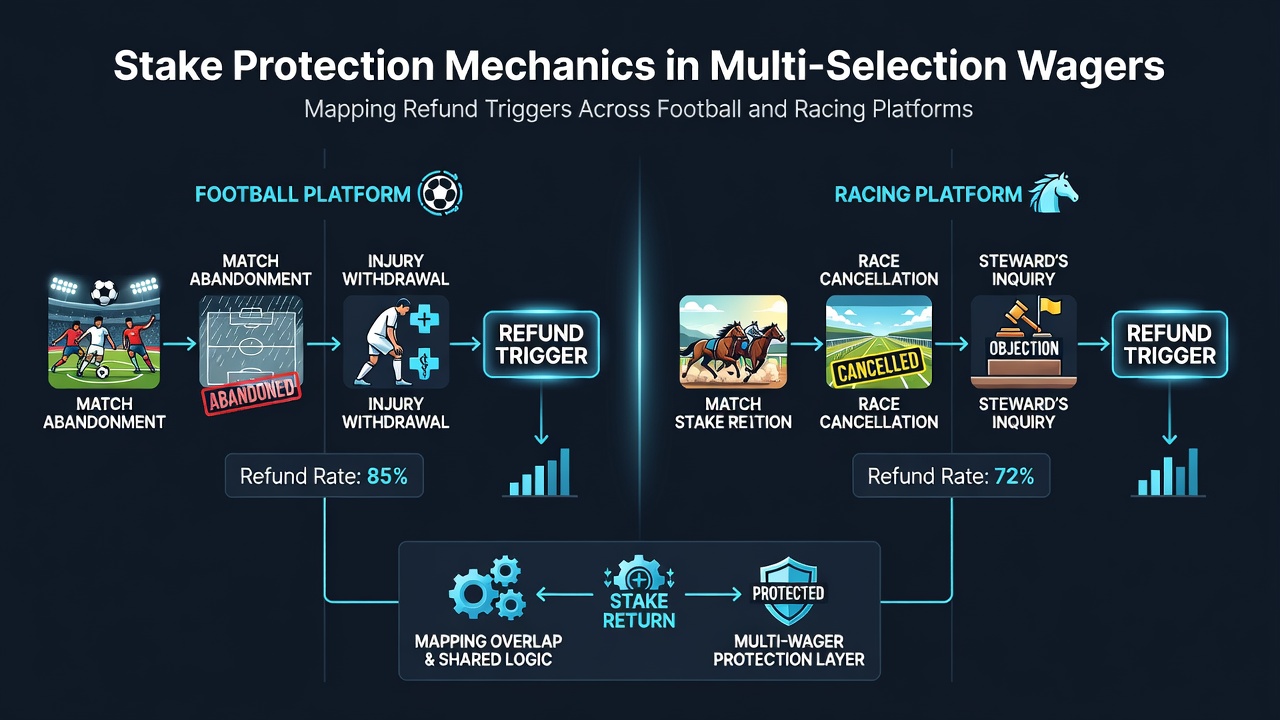
Refund triggers function by monitoring the outcome of each leg in an accumulator, and platforms calculate eligibility once all events conclude. In football markets a trigger often engages when one selection in a five-leg or six-leg bet loses while the remaining legs succeed, whereas racing platforms apply similar logic but adjust thresholds for each-way components and non-runners. Data from industry reports shows these triggers activate more frequently in high-volume periods such as major racing festivals or international football tournaments.
Operators define the exact number of required winners through published terms, and users receive automatic refunds when the pattern matches the preset criteria. For instance a four-fold football accumulator might refund the stake if exactly one leg fails, yet the same structure in horse racing could incorporate rules for dead heats or withdrawals that alter the payout structure without voiding the entire bet.
Football Platform Variations
Football-focused platforms implement stake protection through tiered refund levels that scale with the number of selections. A typical setup refunds 100 percent of the stake on five-fold or larger accumulators when one leg loses, and some extend this to two-leg failures on seven-fold or greater bets. These mechanics rely on cash-out values and in-play adjustments that platforms update continuously during live matches, allowing the system to recalculate protection eligibility in real time.
European regulatory frameworks, including those outlined by the Pennsylvania Gaming Control Board, require clear disclosure of these refund conditions so that bettors understand the precise sequences that activate protection. Observers note that football markets generate higher volumes of multi-selection wagers during summer transfer windows and pre-season friendlies, periods when platforms often promote enhanced protection offers tied to specific leagues.
Racing Platform Applications
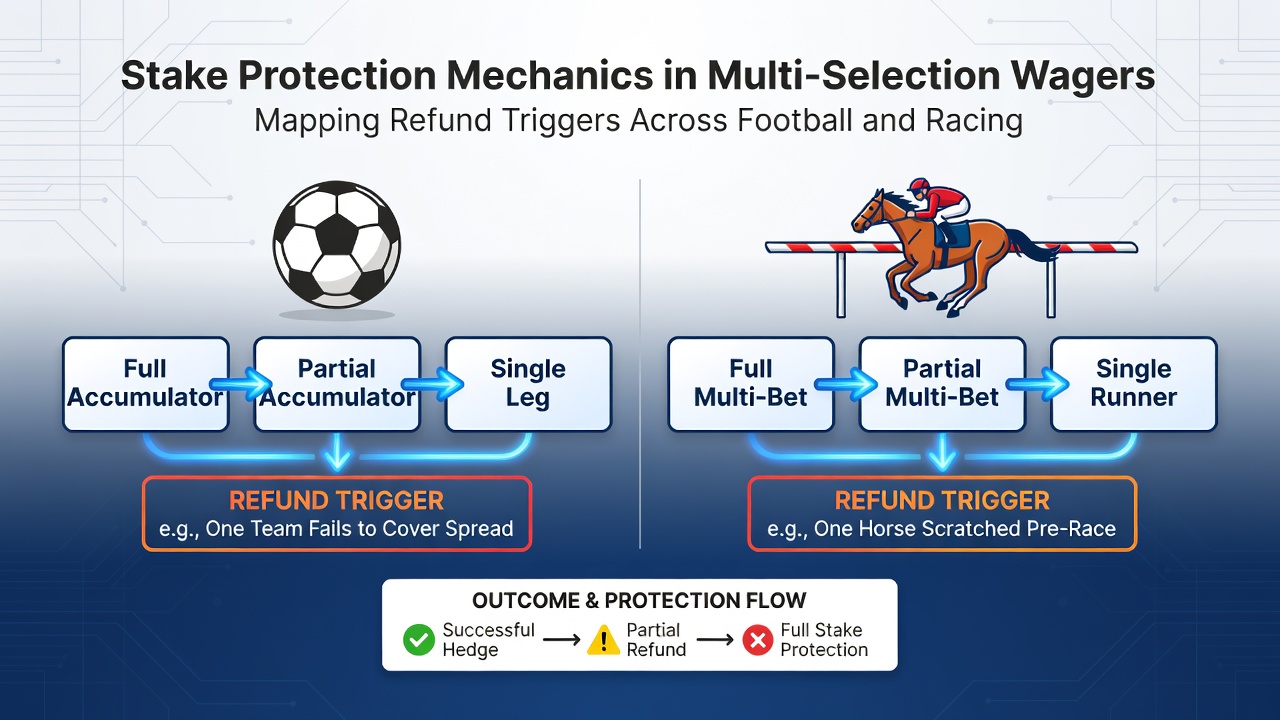
Racing platforms adapt the same core refund logic but incorporate additional variables such as each-way terms, place payouts, and non-runner rules. A six-selection racing multiple might trigger a full stake refund if two legs fail to place while the others succeed, and operators frequently publish separate tables that list the exact refund percentages for each combination of winners and placed selections. These tables account for rule 4 deductions and dead-heat scenarios that modify the effective number of successful legs.
Industry data indicates racing multiples receive stake protection at slightly different rates than football accumulators because non-runners automatically reduce the number of active selections, which can shift a bet across the refund threshold. Platforms in Australia and Canada apply comparable structures, with the Victorian Responsible Gambling Foundation publishing guidance that highlights how these mechanics must remain transparent across all bet types.
Mapping Triggers Across July 2026 Updates
Platform updates scheduled for July 2026 introduce refined trigger mappings that standardize refund conditions between football and racing products. These changes consolidate the minimum selection counts required for protection and introduce unified terminology so users encounter consistent language when switching between sports. Research from academic gaming studies shows that standardized triggers reduce disputes and improve user comprehension of when refunds apply.
Operators test these updated mechanics during quieter periods before major events, and the adjustments allow systems to handle mixed-sport accumulators that combine football and racing legs within a single wager. The mapping process identifies edge cases such as abandoned matches or void races and assigns specific refund outcomes to each scenario before the new rules take effect.
Conclusion
Stake protection mechanics continue to evolve through precise mapping of refund triggers that apply across football and racing platforms. These systems maintain clear thresholds based on selection counts and outcome patterns, while regulatory and industry sources require transparent communication of the exact conditions that activate refunds. The July 2026 refinements further align these mechanics so that users experience consistent protection rules regardless of the sports included in their multi-selection wagers.