Inside the Algorithms: How Odds Compilers Calculate Margins for Live Event Wagers
Clara Lehmann · Jul 11, 2026
Inside the Algorithms: How Odds Compilers Calculate Margins for Live Event Wagers
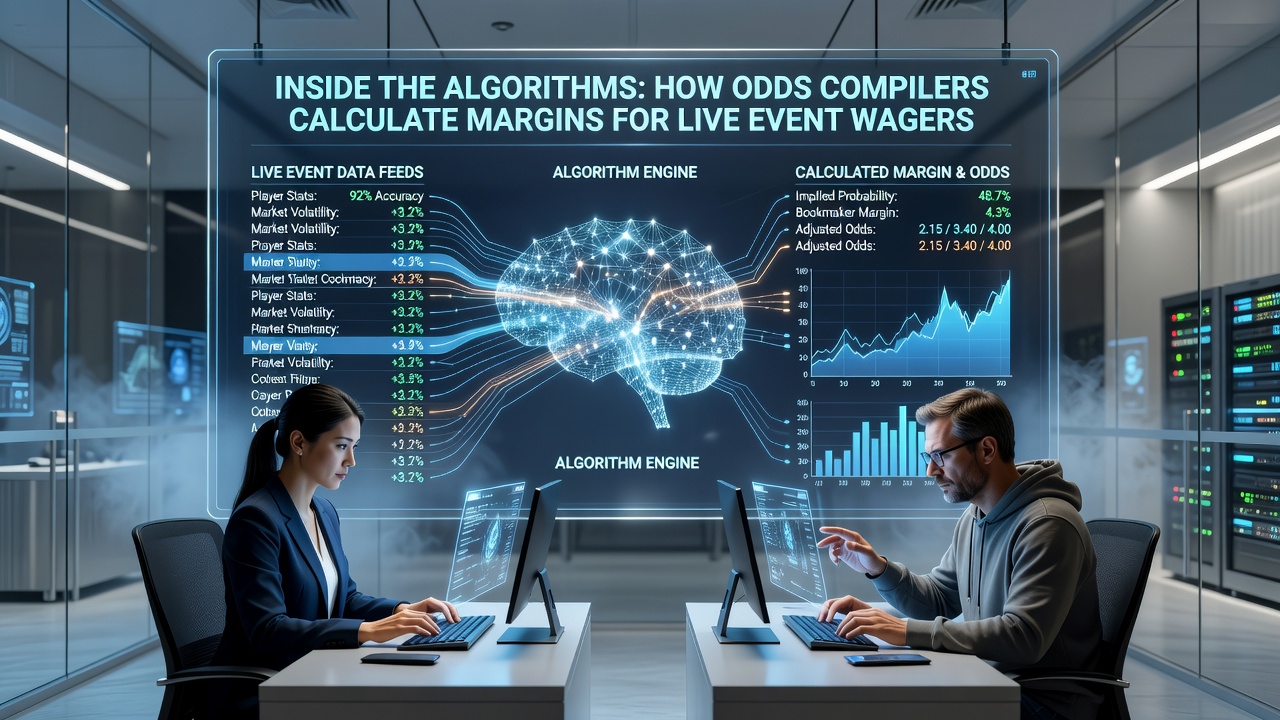
Odds compilers build margins into live wagers through layered statistical models that convert estimated probabilities into decimal or fractional formats while embedding an overround. These systems draw on real-time feeds from multiple data providers, and they adjust continuously as events unfold. In practice, the margin represents the bookmaker's built-in edge, calculated as the sum of implied probabilities exceeding 100 percent across all outcomes in a market.Core Mechanisms in Margin Calculation
Compilers start with base probability estimates derived from historical datasets, player form metrics, and situational variables such as weather or venue conditions. They then apply a conversion formula that adds the overround proportionally or through more complex weighting schemes, ensuring the total implied probability surpasses 100 percent without distorting individual odds beyond market tolerance. Researchers at institutions including the University of Nevada, Reno have documented how these adjustments scale with liquidity levels in high-volume sports like football and basketball.
Live markets introduce additional layers because compilers must respond to in-play developments within seconds. When a goal occurs or a serve breaks in tennis, probability distributions shift instantly, prompting the algorithm to recalculate every outcome's implied margin contribution. This process relies on Bayesian updating techniques that incorporate new evidence while preserving the overall overround target, typically ranging between 2 and 5 percent for major events depending on competition intensity.
Real-Time Data Integration and Risk Controls
Multiple data streams converge inside the compiler engine, including official score feeds, player tracking systems, and betting flow indicators from the exchange layer. Algorithms weigh these inputs against pre-set risk thresholds, automatically tightening margins on heavily backed selections to limit exposure. When volume spikes on one side of a market, the system redistributes the overround across remaining outcomes to maintain balance without manual intervention.
Observers note that in July 2026 several international operators reported elevated live margin stability during major tournaments, attributed to improved machine learning models trained on prior seasons' in-play data. These models detect patterns such as momentum shifts or fatigue indicators faster than traditional statistical methods alone could achieve.
Algorithmic Approaches Across Different Sports
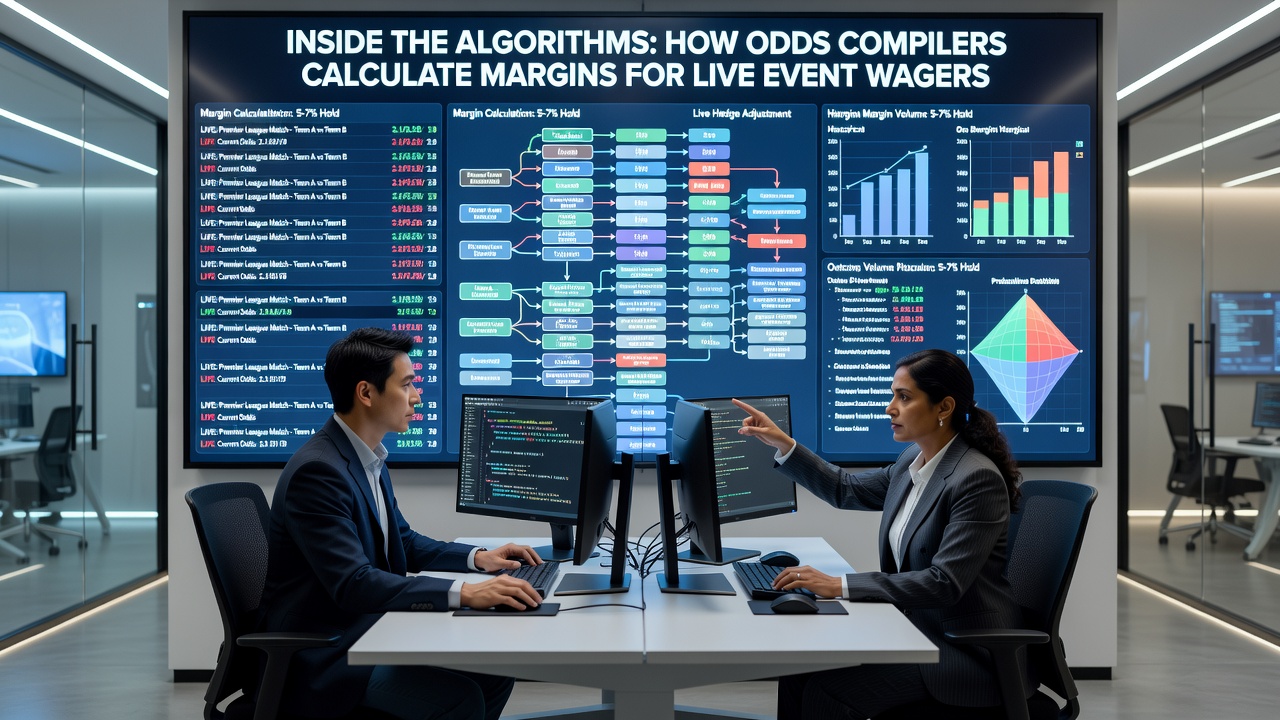
Football compilers often segment matches into micro-states such as possession sequences or set-piece opportunities, assigning distinct probability vectors to each state before aggregating them into final market prices. Tennis algorithms focus on point-by-point win probabilities that factor serve advantage and historical head-to-head data, recalibrating after every point. Horse racing in-play compilers, by contrast, emphasize pace and position metrics captured by GPS tracking, applying margin overlays that account for the smaller field sizes typical in jump events.
According to data published by the American Gaming Association, live event wagering volumes have grown steadily since 2023, prompting compilers to refine margin distribution methods that protect against sharp money movements while remaining competitive against peer operators. Industry reports from Canadian provincial regulators further indicate that operators using hybrid statistical and neural network approaches achieve narrower variance in realized margins compared with purely rule-based systems.
Regulatory Context and Transparency Measures
Regulators in multiple jurisdictions require operators to maintain auditable records of how margins are derived and adjusted during live events. These requirements include documentation of the probability models, overround targets, and any automated risk triggers. Compliance frameworks in Australia and several European markets emphasize that margin calculations must remain consistent with advertised payout percentages, preventing undisclosed tightening during periods of high volatility.
Take one case where a European operator disclosed its compiler parameters in an industry white paper, revealing that live football margins averaged 3.8 percent across Premier League fixtures, with automated reductions to 2.9 percent during lower-liquidity periods to sustain trading volume. Such disclosures help market participants understand how algorithmic decisions affect available prices without revealing proprietary code.
Conclusion
Odds compilers calculate margins for live event wagers by integrating probability models with continuous data feeds and automated risk controls that preserve the overround across shifting market conditions. The systems operate across diverse sports through specialized state-transition logic, and they respond to regulatory demands for transparency in multiple jurisdictions. As live betting volumes continue to rise, the underlying algorithms evolve through machine learning refinements that draw on expanding historical datasets while maintaining the core mathematical relationship between implied probabilities and bookmaker margins.