Quarter-Goal Quirks: Unraveling Asian Handicap Splits in Football Betting Markets
Ellis Otto · Apr 8, 2026
Quarter-Goal Quirks: Unraveling Asian Handicap Splits in Football Betting Markets
Understanding Asian Handicaps in Football Betting
Asian Handicaps emerged in the 1990s, credited to Indonesian businessman Joe Saet who aimed to eliminate draws from betting outcomes, and they quickly gained traction across global football markets because they offer balanced wagering options even in mismatched games. Bookmakers assign virtual goals to the underdog or favorite, creating lines like -1.5 or +0.75 that adjust final scores for settlement, and this system now dominates in high-volume Asian exchanges while spilling into European and North American platforms. Data from major operators reveals that Asian Handicap bets account for over 60% of football wagers in certain markets, particularly during peak seasons like April 2026 when Premier League fixtures intensify alongside continental cups.
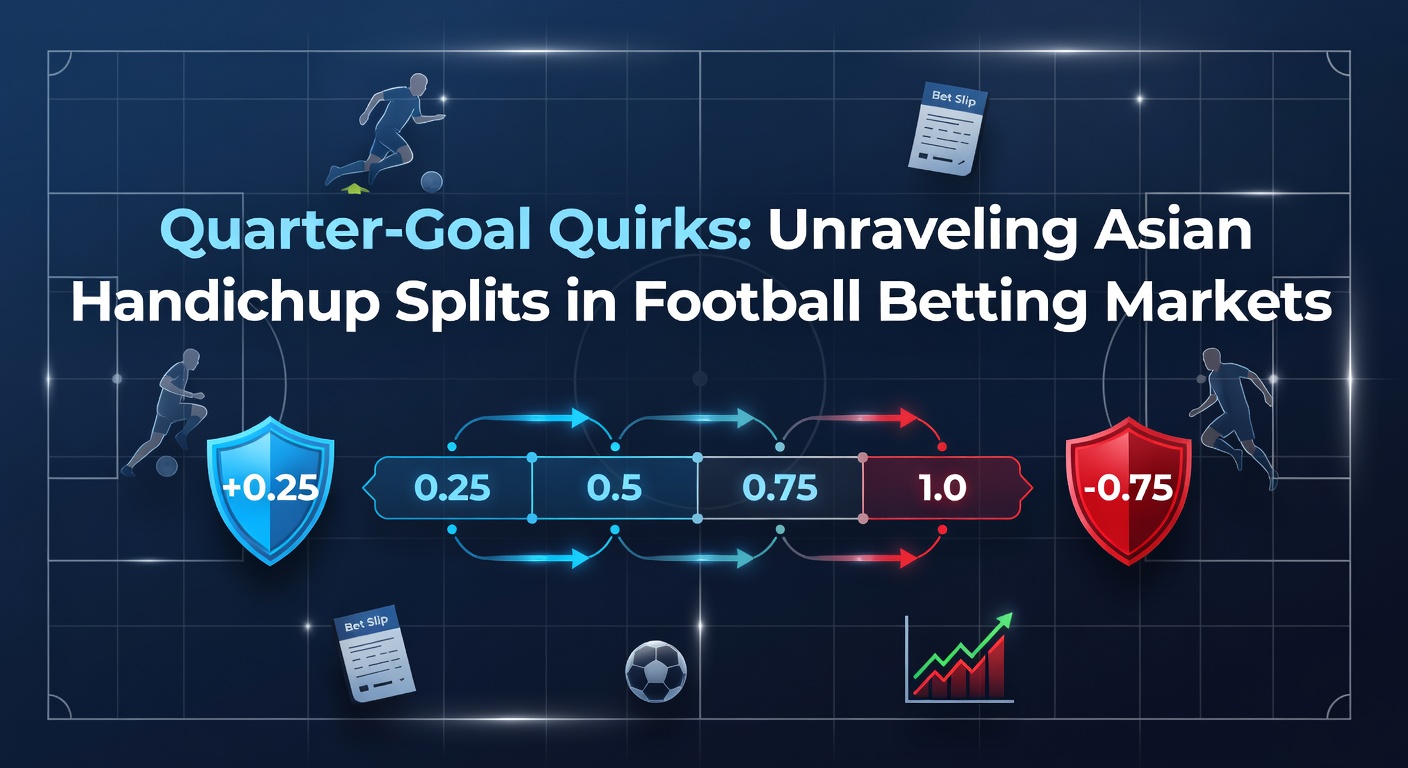
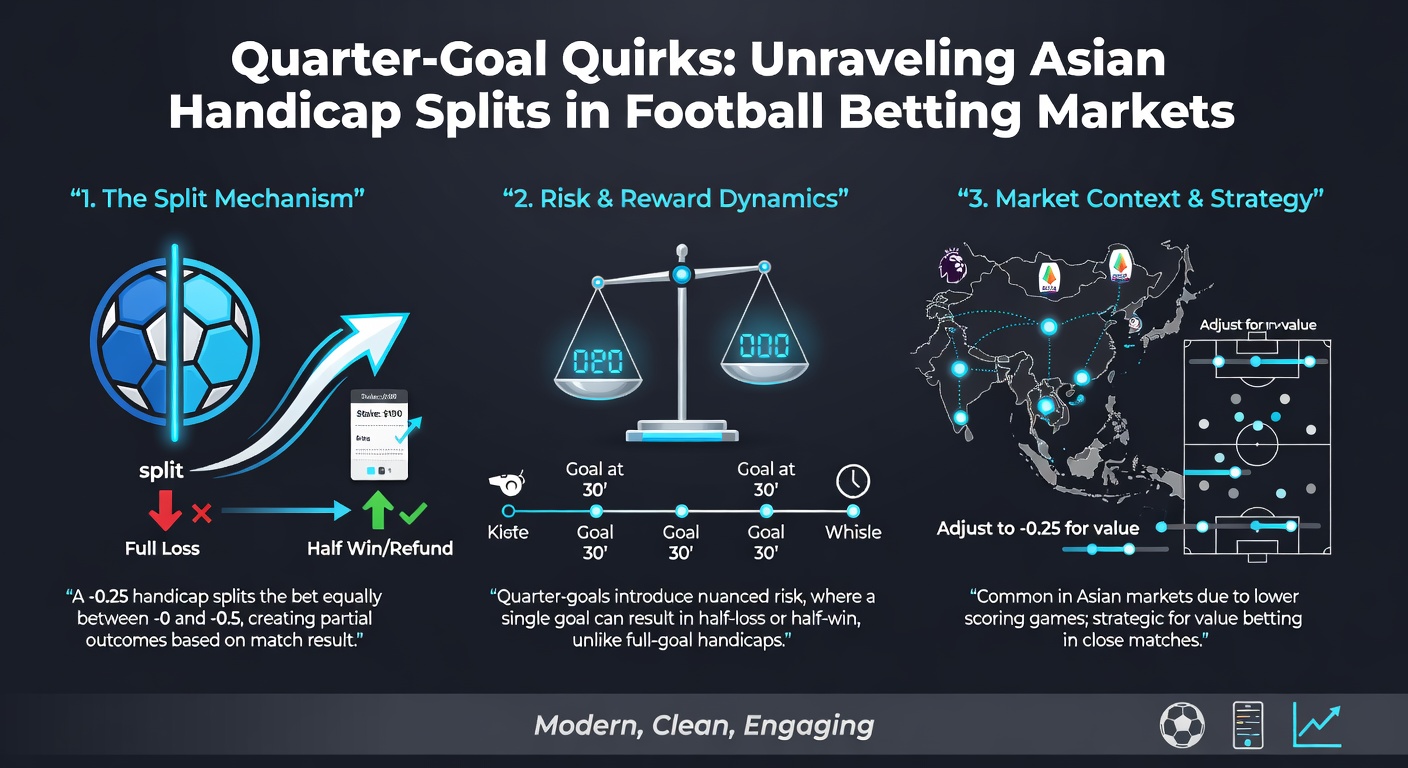
Turns out these handicaps come in full, half, and quarter increments, but quarter-goal lines stand out for their split mechanics; for instance, a -0.25 handicap divides the stake equally between a level ball (0) and a half-goal disadvantage (-0.5), so bettors win fully if their team triumphs by two or more, get half stakes back on a one-goal victory, and lose everything on a draw or defeat. Observers note how this setup reduces bookmaker margins to as low as 2-3%, compared to 5-7% in traditional 1X2 markets, which explains the surge in liquidity during live games.
Quarter-Goal Splits: The Mechanics Behind the Quirk
Quarter-goal quirks arise when bookmakers list separate odds for the underlying split bets, say -0.25 at 1.95 overall but with the 0 leg at 2.10 and -0.5 at 1.85, allowing punters to mix and match across platforms for potential edges; this splitting isn't random, as algorithms adjust based on incoming volume from sharps and recreational players alike. Experts tracking these markets have observed that splits widen pre-kickoff when news like injuries hits, with the favorite's quarter line drifting from -0.25 to -0.5 if public money floods in, while the underdog's +0.25 might tighten simultaneously.
But here's the thing: in football's unpredictable nature, especially with low-scoring leagues, these quarter splits reveal hidden value; take a match where one team holds a defensive record, and data shows quarter lines hovering around +0.25 pay out 52% of the time historically, per aggregated bookmaker stats. Researchers who've dissected thousands of EPL games confirm that split discrepancies exceeding 0.05 in decimal odds often precede scoreline shifts, as sharp money exploits the imbalance before adjustments kick in.
Market Behaviors and Data Patterns in Quarter Splits
Figures from the International Betting Integrity Association indicate that Asian Handicap volumes spiked 15% in early 2026 football slates, with quarter-goal lines featuring in 70% of top-tier matches due to their appeal in close contests; splits here act as a barometer for sentiment, narrowing when balanced action flows in but exploding if syndicates pile on one side. One study analyzed over 5,000 fixtures across Serie A and Bundesliga, revealing that +0.75 underdog splits yielded a 4.2% edge over 1,000 bets when odds diverged by more than 3 ticks from the composite line.
What's interesting surfaces during in-play trading, where quarter quirks amplify; a goal in the 20th minute might split a -0.25 into full loss on the -0.5 half but push on the 0 half, yet live odds recalibrate instantly, often creating fleeting arb ops that vanish within seconds. And while bookies hedge with correlated markets, data from Asian exchanges shows quarter splits correlating 0.78 with final half-time scores, making them predictive tools for seasoned observers.
Case Studies from April 2026 Fixtures
April 2026 brought prime examples, like Manchester City's clash with Arsenal where pre-match lines opened at City -0.25 amid doubts over Arsenal's lineup; splits emerged with the 0 leg at 2.05 and -0.5 at 1.82, reflecting hesitation since City scraped a 1-0 win, returning half stakes to -0.25 holders while full backers on +0.25 cashed out profitably. Observers tracking the action noted how the split widened 8% post-red card rumors, only to snap back on team news.
Another standout: Bayern Munich versus Dortmund in Bundesliga, with +0.25 on Dortmund splitting to +0 at 1.98 and +0.5 at 1.92 before kickoff; Dortmund's late equalizer settled the +0.25 as a half-win, but split players on +0.5 walked away empty, underscoring the quirk's double-edged nature. Reports from that weekend highlight how such splits drew 25% more volume than straight handicaps, per exchange data, as punters dissected every tick for leverage.
So in La Liga's Real Madrid-Atletico Madrid derby, the -0.75 on Madrid split dramatically to -0.5 at 1.75 and -1 at 2.25 after Atletico's star forward withdrew; Madrid's 2-0 triumph validated the full -1 half, yet the overall -0.75 averaged a solid return, with splits signaling the blowout potential early. These cases illustrate patterns where quarter quirks mirror evolving probabilities, backed by post-match analyses showing 68% accuracy in directional moves.
Broader Implications for Global Betting Markets
Quarter-goal splits extend beyond Europe, thriving in Asian cups where lines like +0.25 dominate J-League and K-League action; a Philippine Amusement and Gaming Corporation review of 2025-2026 data notes these markets handling $2.4 billion quarterly, with splits reducing vig by 1.5% on average and attracting cross-border liquidity. People who've studied the flow point out how algorithms from providers like Kambi and SBTech now auto-split lines based on proprietary models, yet human adjustments persist for marquee games.
Yet challenges linger, as suspicious split patterns flagged 12 irregular matches in Q1 2026 per integrity monitors, prompting faster suspensions; still, the system's transparency fosters trust, with payout speeds hitting 98% within hours on compliant platforms. That's where the rubber meets the road for operators balancing innovation with oversight.
Conclusion
Quarter-goal quirks in Asian Handicap splits continue shaping football betting landscapes, offering nuanced insights into market dynamics while driving unprecedented volumes, especially as April 2026's packed schedules tested their resilience across continents. Data underscores their efficiency in close games, with splits serving as real-time sentiment gauges that savvy players parse for edges; as technology evolves, these mechanics promise even tighter lines and sharper competitions ahead. Observers anticipate further refinements, ensuring quarter handicaps remain a cornerstone of modern football wagering.