Seasonal Shifts in Accumulator Insurance Offers Across Major Football Leagues
Ellis Otto · Jun 24, 2026
Seasonal Shifts in Accumulator Insurance Offers Across Major Football Leagues
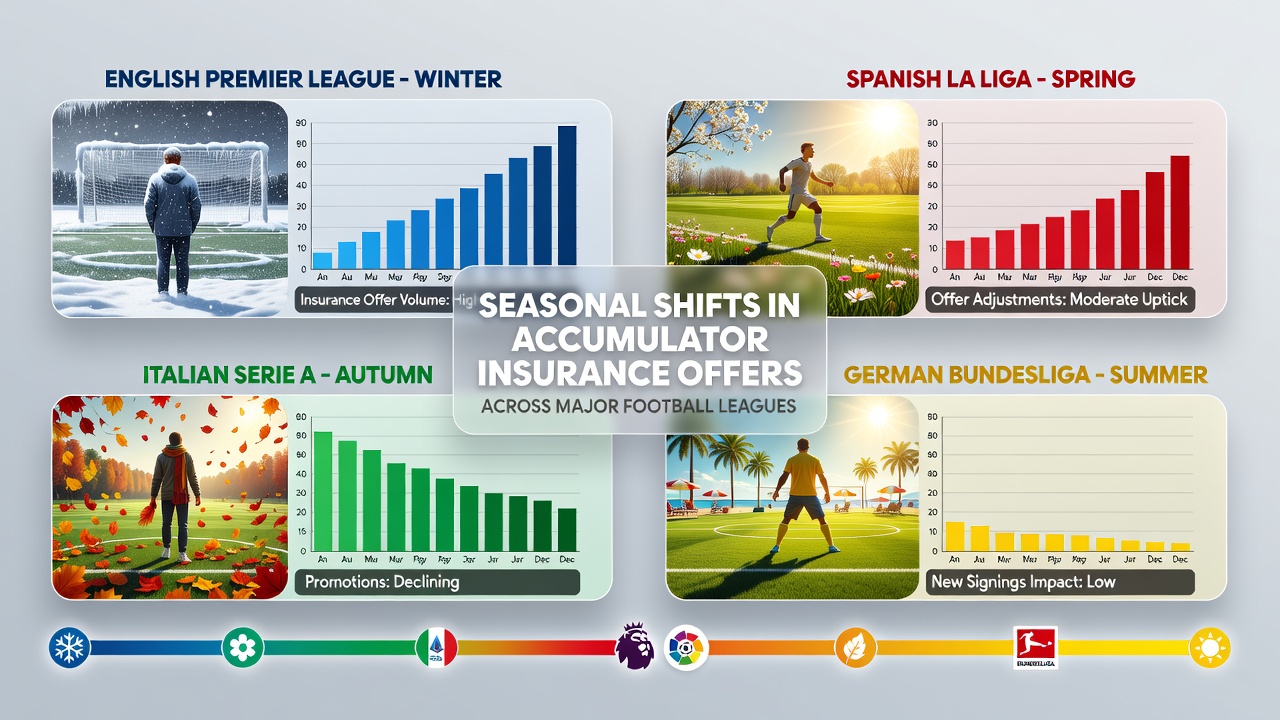
Accumulator insurance promotions have followed distinct patterns across Europe's top football leagues, and those patterns shift noticeably with the calendar. Bookmakers adjust refund offers on losing accumulators as seasons move from pre-season friendlies through winter fixtures and into spring title deciders, while data indicates the frequency and generosity of these deals change in response to fixture congestion, transfer windows, and major international events.
Patterns Observed at the Start of Domestic Seasons
August typically brings the highest volume of accumulator insurance deals in the Premier League, Bundesliga, La Liga, and Serie A. Operators launch these promotions to capture new accounts during the opening weeks when interest peaks, and studies show refund offers often cover four-fold or five-fold accumulators with a single-leg safety net. In contrast, the same bookmakers scale back the number of eligible markets once September fixtures settle into a rhythm because customer acquisition targets have already been met for the campaign.
June 2026 marks the transition point between the 2025/26 season conclusion and preparations for the next campaign. Observers note that several operators extend limited insurance offers tied to pre-season tournaments and early World Cup 2026 qualifiers, yet these deals tend to carry stricter eligibility rules than those released in August because betting volumes remain lower during the summer months.
Mid-Season Adjustments Across European Leagues
Between November and February, fixture schedules grow denser with domestic cups and European competitions running in parallel. Accumulator insurance offers during this period frequently narrow to specific leagues or reduce the refund percentage, while data from industry tracking services reveals operators shift focus toward in-play cash-out features instead. The Premier League sees the most consistent winter promotions, whereas Serie A and Ligue 1 operators often pause insurance deals entirely for several weeks when attendance and television audiences dip.
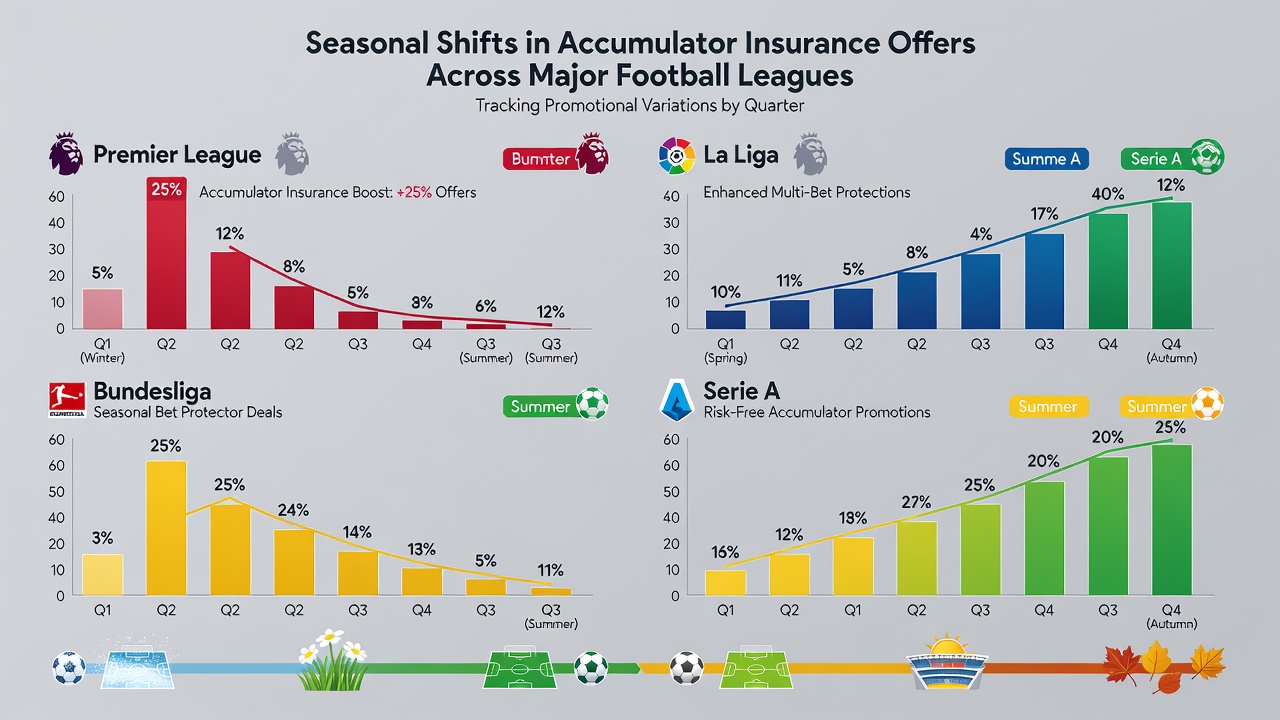
What's interesting is how these changes align with broader regulatory reporting requirements. A 2025 analysis published by the International Betting Integrity Association documented that operators in multiple jurisdictions reduced bonus liability during high-volume periods to maintain compliance ratios. The same report highlighted that Bundesliga bookmakers introduced tiered insurance levels in January 2026, granting full stake refunds only on accumulators of six legs or more.
Influence of International Breaks and Summer Windows
International breaks create temporary drops in accumulator insurance availability because fewer club matches appear on schedules. Operators redirect marketing spend toward outright markets and specials rather than multi-leg refund offers. When action resumes after breaks, promotions reappear quickly, often with added conditions such as minimum odds requirements that rise during the final weeks of the season when title races and relegation battles intensify.
Research conducted by the Responsible Gambling Council in Canada examined similar seasonal bonus patterns in North American sports betting markets and found parallel trends, where promotional generosity contracts during off-peak periods before expanding again at season restarts. Those findings mirror the adjustments tracked across European football leagues.
Factors Driving Offer Variations
Transfer deadlines, weather disruptions, and broadcast schedules all contribute to the timing of accumulator insurance campaigns. Bookmakers monitor average stake sizes and adjust refund caps accordingly, raising maximum refund amounts during high-profile weeks such as Boxing Day fixtures while lowering them during midweek European nights when participation rates fall. Evidence from multiple operators shows these decisions stem from internal risk models rather than external pressure alone.
Conclusion
Seasonal movement in accumulator insurance offers reflects a combination of commercial strategy, fixture density, and regulatory oversight. Patterns repeat each year yet adapt to new tournament calendars and compliance frameworks, producing measurable differences between leagues and across months. Tracking these shifts provides clear insight into how operators balance customer incentives with operational constraints throughout the football year.